
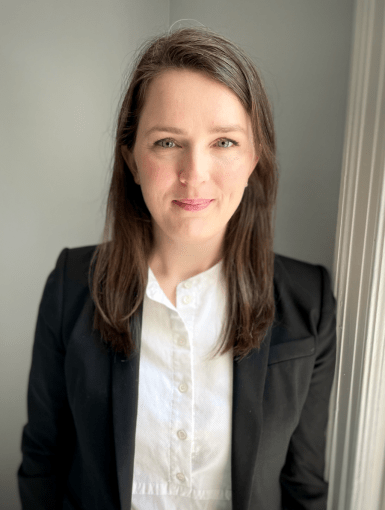
School of Public Policy Associate Professor Claire Dunning will spend the spring semester as a fellow-in-residence at the Rothermere American Institute (RAI) at the University of Oxford, where she will continue her research on the role of philanthropy in shaping public policy and civil rights in the United States. The fellowship will provide Dunning with dedicated time to work on her latest book project, which examines how a relatively small philanthropic foundation supported civil rights efforts from the 1950s through the early 2000s. Her research examines the foundation’s influence on legislation, landmark litigation and broader policy debates, while exploring larger questions about the relationship between private wealth and democratic governance.
Dunning’s interest in the subject grew out of her postdoctoral research on philanthropy and democracy and builds on themes explored in her first book, “Nonprofit Neighborhoods: An Urban History of Inequality and the American State.” Rather than examining how the relationship between philanthropy and democracy should function in theory, she wanted to understand how it has operated in practice, particularly in the context of structural racism and racial inequality in the United States.
Dunning’s research has uncovered evidence of the foundation’s significant but largely unrecognized influence on civil rights policy. Because its original donors preferred to avoid publicity, much of its involvement remained out of public view, even as its financial support helped advance major legislative and legal efforts. “One thing I keep returning to is how much impact a relatively small foundation had, and how invisible its impact has been,” she said.
For Dunning, those discoveries raise important questions about transparency, accountability and the influence of private wealth in a democratic society. While philanthropy can provide critical resources for social change, it also gives donors considerable power to shape which issues receive attention and whose priorities guide policy decisions.
The questions at the center of her book remain relevant today. Foundations continue to influence public policy through research funding, advocacy and support for nonprofit organizations. Dunning’s historical work offers insight into both the benefits of that involvement and the potential consequences when donors' priorities differ from the needs of the communities they seek to serve.
Dunning also brings questions about power, perspective and accountability into her teaching at the School of Public Policy. She encourages students to consider how their own perspectives shape their understanding of policy problems and to recognize the importance of listening to people directly affected by proposed solutions. “I think a lot about responsible and irresponsible uses of power and what that means for future policymakers,” she said. “That is true in the philanthropic sphere, in policymaking and in governance.”
The fellowship at Oxford offers an opportunity to examine these distinctly American dynamics from an international perspective. RAI, based in the United Kingdom, brings together scholars studying American history, politics and society. “I knew it would provide an intellectual community that was both familiar and decidedly unfamiliar in ways that would make my writing and analysis stronger,” said Dunning. After several years spent conducting research for her new book, Dunning also looks forward to writing and thinking in a new place (and the occasional stop at the pub after a day at the library).