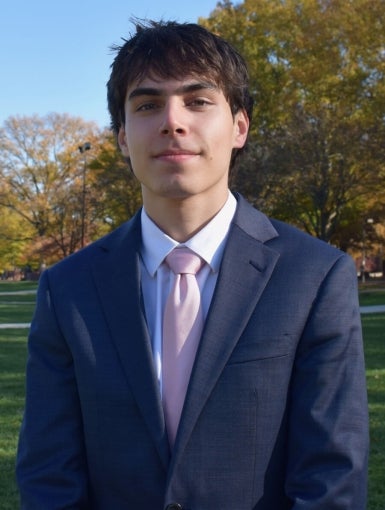
Junior Can Torumtay has spent much of college learning how policy is made. This summer, he got to see the process up close from inside the Maryland Governor’s Office. He was one of six University of Maryland College Park students selected for the Maryland Public Service Scholars’ Governor’s Summer Internship Program. He worked in the Governor’s Office of Homeland Security, where the briefing materials he prepared reached senior officials involved in the decision-making process. “It was a very surreal experience,” said Torumtay, a double major in public policy and government and politics.
The experience also showed Torumtay a side of policymaking that can be difficult to capture in the classroom. “In class and in concept, policy seems fairly orderly and rational, but in real time it’s far more contingent, shaped by timing and relationships,” he said.
Torumtay worked directly for Maryland’s homeland security advisor on issues related to public safety and homeland security. Much of his work involved examining federal actions, their implications for Maryland agencies and questions of state and federal authority. He also attended meetings on election preparedness, public safety, immigration and international affairs and participated in site visits to the State Board of Elections, Maryland Department of Emergency Management and emergency operations centers throughout the region.
With international conflicts, federal immigration actions and preparations for major events including America250 and the 2026 FIFA World Cup all presenting potential implications for Maryland, Torumtay saw how quickly developments outside the state can become issues for state policymakers. “The biggest thing I took away is that policy operates in a much more human and interactive way than the machinelike, automated version that is often portrayed in the media,” he said. “People run the government.”
Torumtay also put his policy skills to work through the Governor’s Summer Internship Program capstone project. He and two other students, all from immigrant families, examined Maryland’s inheritance tax and its potential implications for family businesses, small businesses and immigrant-owned businesses. Since county Registers of Wills rely on inheritance tax revenue to fund their operations, previous efforts to repeal the tax have faced challenges. Torumtay’s group proposed a gradual phaseout based on degree of relationship while reducing the estate tax exemption to help offset the lost revenue.
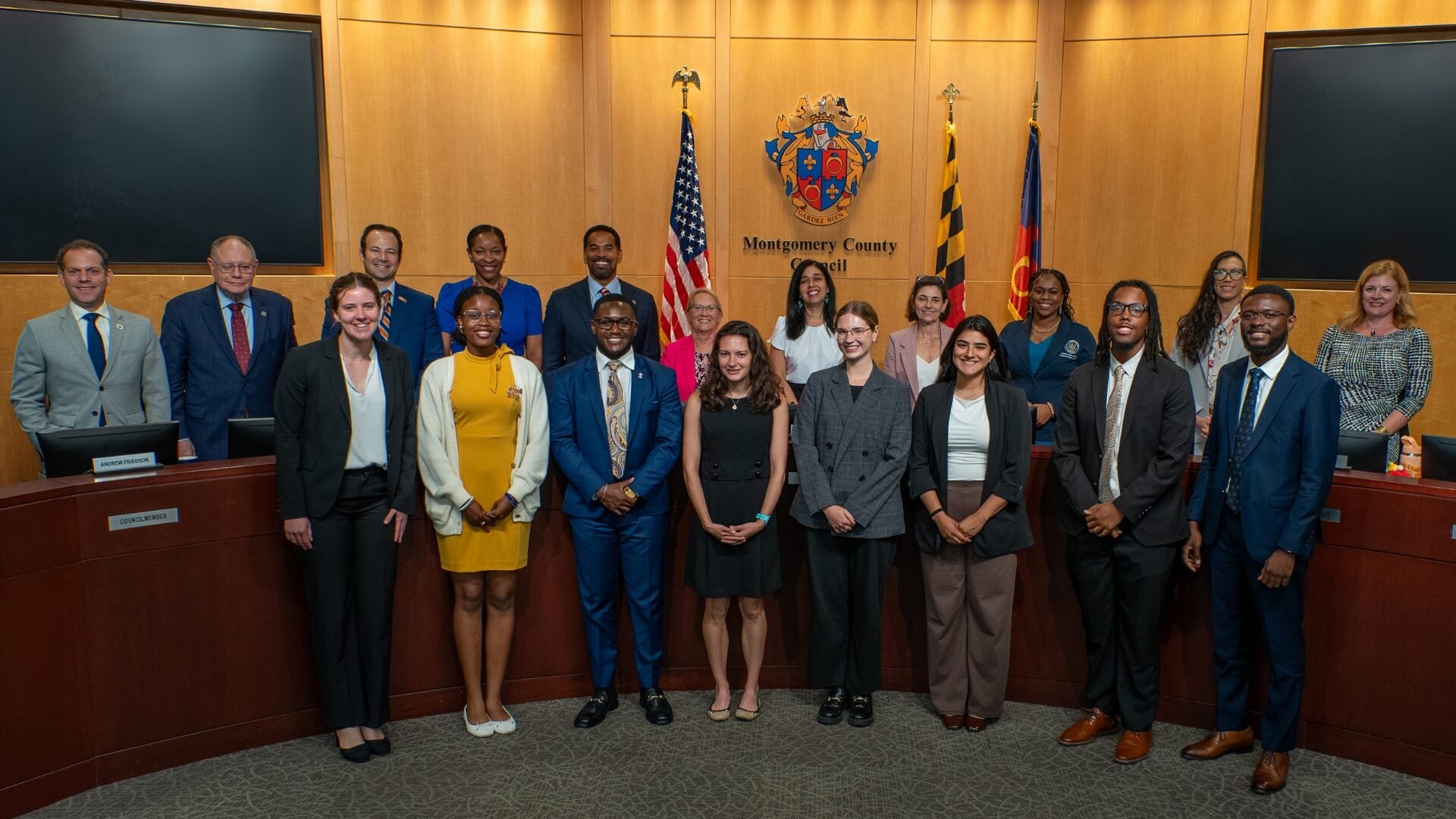
The group presented its proposal to Gov. Wes Moore and members of his executive staff. “Having them engage seriously and actively with it was one of the highlights of the summer and my policy career up to this point,” Torumtay said.
Torumtay’s public policy coursework introduced him to cost-benefit analysis, research, data analysis and policy memo writing, which he put to use throughout the summer. He said Professor Juan Pablo Martínez Guzmán’s public finance course, PLCY 303: Public Economics: Raising and Spending the People’s Money, was especially useful during his internship, and strengthened his interest in economic and fiscal policy.
This fall, another opportunity will take Torumtay from Annapolis to West Point. He has been selected as one of four UMD delegates to the Student Conference on U.S. Affairs (SCUSA) at the U.S. Military Academy, where undergraduate students join West Point cadets and scholars to discuss foreign and domestic policy issues and develop policy recommendations.
This year’s theme, “Peace Through Strength: Power in the 21st Century,” aligns closely with Torumtay’s interest in the Middle East, U.S.-Turkey relations and the role of emerging middle powers. Those interests are also personal. Torumtay grew up in a Turkish immigrant family, speaks Turkish and has been involved with UMD’s Turkish-American student community and earthquake relief efforts for Turkey and Syria.
His work in the Governor’s Office also showed him how international developments can have consequences much closer to home, a perspective he hopes to bring to SCUSA.
Torumtay wants to continue exploring both domestic economic policy and foreign policy, interests he connects through questions of who holds power, how it is used and how policy affects people. He plans to pursue additional foreign policy coursework, research and language study while continuing to build on his foundation in domestic policy. “I don’t have my entire path mapped out, as I’m just a rising junior,” Torumtay said, “but for the time I feel like I have a clear sense of the direction I’m heading.”