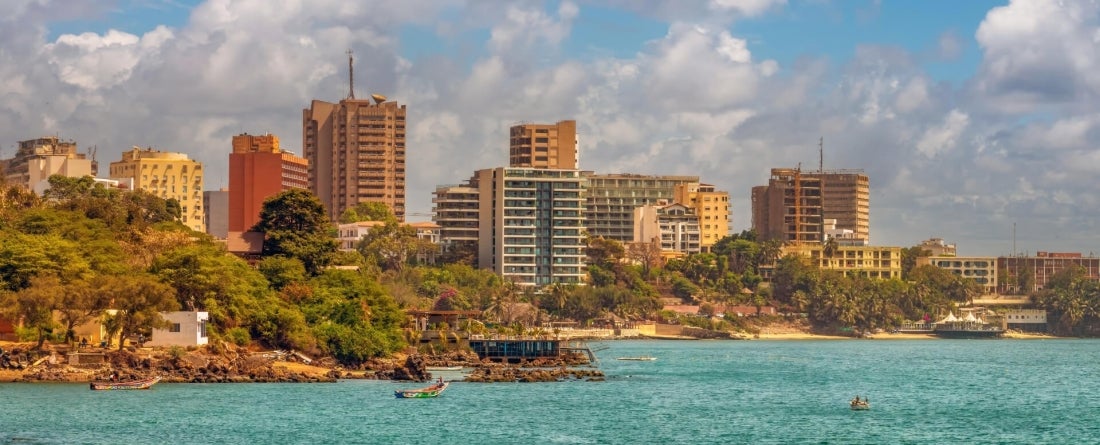
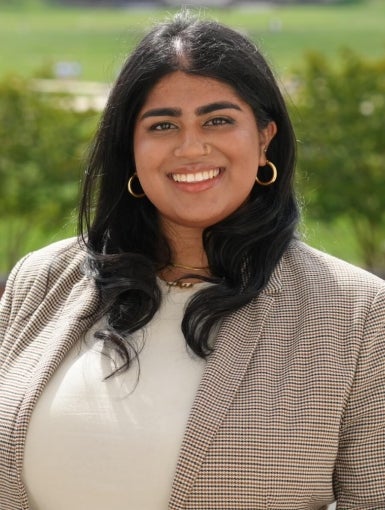
Saveena Suri, MPP ’26 spent the past year in Senegal studying French as a Boren Fellow through the African Flagship Languages Initiative (AFLI). She went with a strong interest in the relationship between conflict and international development. Living in Dakar gave her a chance to hear directly from Senegalese experts on security and development in the region, including perspectives she had not encountered in the classroom.
AFLI is an immersive language program that allows students to strengthen their proficiency in African languages while learning about the countries and cultures where they are spoken. Suri chose the French program in Senegal because she wanted to learn more about West Africa and the policy issues she hopes to work on in the future.
Her time in Senegal came during a period of uncertainty for international development. USAID, which had a significant presence there, had recently shut down. Through her coursework and five-month internship at the Timbuktu Institute African Center for Peace Studies, a Dakar-based think tank focused on security and terrorism in the Sahel, Suri heard directly from Senegalese and Malian experts about security and development in the region. Conversations with Senegalese people about the future of development in West Africa also complicated some of her own thinking about foreign assistance. “While the intentions behind the development work are noble,” said Suri, “I observed in Dakar how it can perpetuate systems of dependence that reinforce colonial power dynamics.”
Those conversations led Suri to reconsider some of her own views about international development. She also thought about development work she had participated in and whether, despite good intentions, it might have contributed to some of the same problems she was seeing and hearing about from Senegalese people.
At the School of Public Policy, Suri studied policy issues including the legacy of colonialism, migration, religious extremism and democracy-building in West Africa. In Senegal, she learned about those topics in French from Senegalese professors and talked with people about national politics, religion, gender roles and cultural norms. “The insights I received from discussions and observations of daily life enhanced my classroom and academic understanding that I deeply appreciate,” said Suri.
Suri’s experience extended beyond her language classes. She lived with a host family, ate traditional Senegalese meals with them each night and, through her internship at the institute, tracked regional security developments and researched U.S. policy in West Africa. Her internship coincided with U.S. airstrikes targeting Islamic State militants in Nigeria in December 2025 and major terrorist attacks in neighboring Mali in April 2026, giving her the opportunity to hear directly from regional security experts as events unfolded. Suri also worked closely with Timbuktu Institute founder and director Bakary Sambe, whose expertise helped deepen her understanding of security challenges in the Sahel. “These unique experiences in Senegal provided me with cultural exposure that would be incredibly useful when carrying out my federal service requirement,” said Suri, “as I have an understanding of regional dynamics rooted in personal experience and connection.”
Boren fellowships support U.S. students studying languages and regions considered important to U.S. national security. Recipients commit to seeking employment in the federal government after completing their studies. The program defines national security broadly and includes issues such as sustainable development, migration, public health and economic competitiveness.