
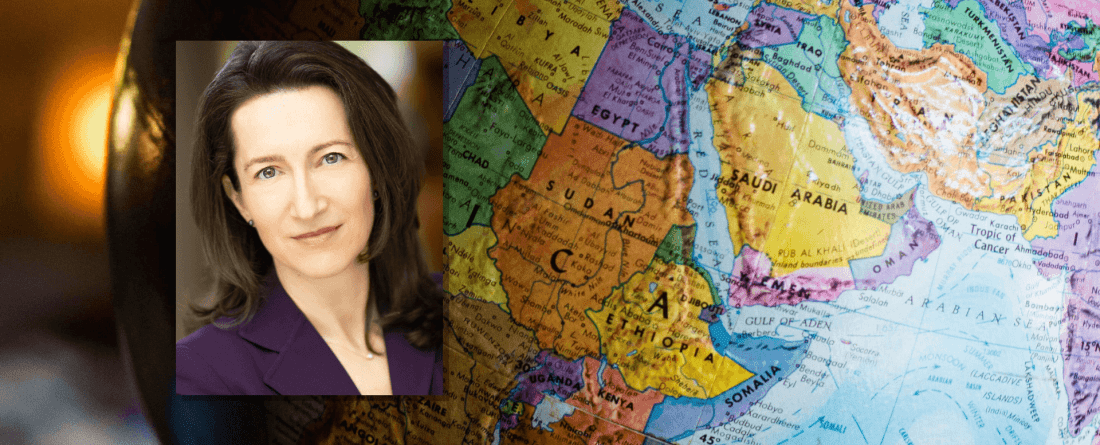
Dr. Lise Howard, Professor of Government & Foreign Service at Georgetown University
Lise Morjé Howard is Professor of Government and Foreign Service at Georgetown University, and President of the Academic Council on the United Nations System. She has written two award-winning books about United Nations peacekeeping, both published with Cambridge University Pres—UN Peacekeeping in Civil Wars, and Power in Peacekeeping. She has published articles and book chapters about civil war termination, peacekeeping, and American foreign policy in many leading journals such as International Organization, International Security, International Studies Quarterly, International Peacekeeping, Global Governance, Foreign Affairs, Foreign Policy, and with Oxford University Press. Dr. Howard earned her M.A. and Ph.D. in Political Science from UC, Berkeley, and her A.B. in Soviet Studies from Barnard College, Columbia University. She has held yearlong fellowships at Stanford University, Harvard University, the University of Maryland, and the U.S. Institute of Peace. She holds French and American passports, and is fluent in French. Also speaks Russian, having studied Soviet Constitutional Law in Leningrad/St. Petersburg from 1990-1992, during the collapse of the Soviet constitutional order.