
On January 20, 2025, President Trump signed Executive Order 14169, imposing a 90-day pause on U.S. foreign assistance. Within six months, the U.S. Agency for International Development (USAID), the federal government's main administrator of non-military foreign assistance, was dismantled. While critics have challenged these decisions and their consequences, proponents characterize the changes as the beginning of a new era in U.S. foreign assistance.
How has this transition unfolded? What is the current status of U.S. humanitarian assistance? Do the developments represent a retreat from longstanding American commitments? What influences are shaping the emerging foreign assistance architecture? What are the implications for humanitarian policy and practice?
Tobias Stillman will offer a practitioner's perspective about the opportunities, complexities and unresolved issues surrounding the transformation of U.S. foreign assistance. His presentation draws on decades of experience in the field, including firsthand involvement in Operation End Starvation (OES), one of the first major humanitarian assistance initiatives advanced under the Trump administration.
About the Speaker:
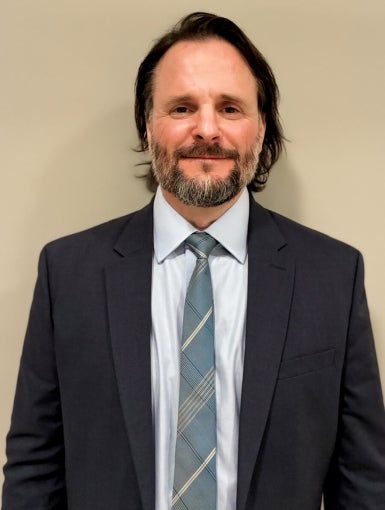
Tobias Stillman is currently a senior research associate at the Center for International and Security Studies at Maryland (CISSM), where his work examines how model-based forecasting can strengthen responses to food insecurity and nutrition emergencies, as well as contemplates the evolution of global humanitarian assistance in the post-USAID era.
For more than 30 years, Stillman has held senior roles at the intersection of global health, nutrition and food security in fragile and humanitarian settings. Throughout his career, he has focused on translating evidence into policy and practice, advancing global standards, strengthening institutional systems and improving the effectiveness of humanitarian and development assistance. He has designed and led research initiatives, technical strategies and operational programs for major international organizations, including UNICEF, Save the Children and Action Against Hunger, undertaking activities spanning more than 35 countries in Africa, Asia, Latin America and the Middle East.
Most recently, he served as director of global programs for OES from 2025 to 2026, engaging with the U.S. Department of State, humanitarian organizations and product manufacturers to shape the direction of this large-scale public-private partnership.
Stillman received an MPH from the Johns Hopkins Bloomberg School of Public Health and has lectured on food security and nutrition at Johns Hopkins University, Columbia University and the University of Zimbabwe.