
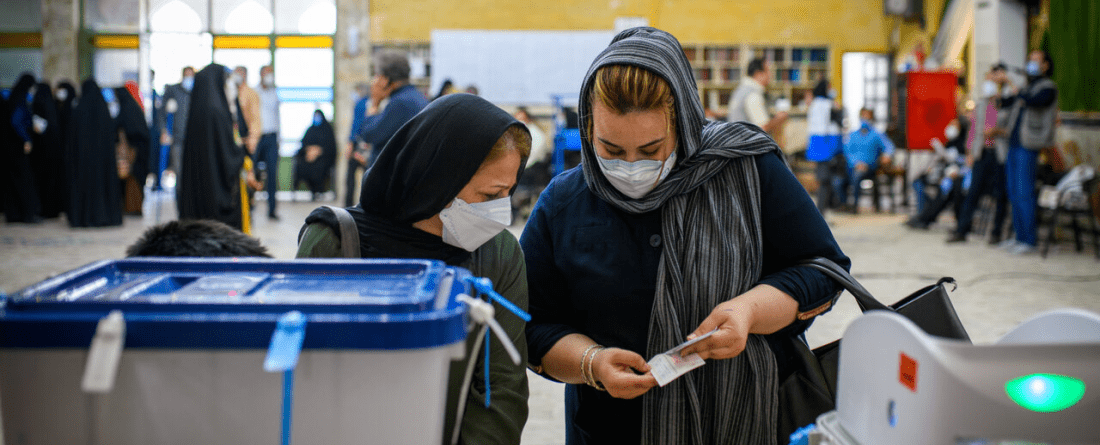
Seven months into the Biden administration, Iran also has a new president who faces a complex regional environment and serious domestic challenges. Meanwhile, the fate of the 2015 Joint Comprehensive Plan of Action remains unclear. The Center for International and Security Studies at Maryland has recently completed a poll of Iranian public opinion on domestic, regional, and international issues. The Atlantic Council’s Future of Iran Initiative invites you to a discussion of the poll results and their implications for Iran domestically, Iran’s role in the region, and US-Iran diplomacy.
The discussion will be held via Zoom on October 18, 2021, from 12:00 – 1:30 p.m. ET. A link to the meeting will be sent to those who register to attend. The event is open to press and on-the-record.
A conversation with
Nancy Gallagher - Director, Center for International and Security Studies, University of Maryland
Kevan Harris - Assistant Professor of Sociology University of California, Los Angeles
Azadeh Zamirirad - Iran Researcher and Deputy Head of the Africa and Middle East Division, German Institute for International and Security Affairs
Moderated by
Barbara Slavin - Director, Future of Iran Initiative, Atlantic Council