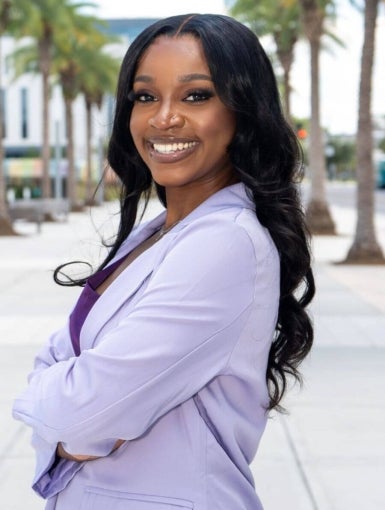
Graduate student Kimberley Osias is studying gaps in how public systems provide access to basic resources. She recently brought that work to the School of Public Policy, organizing an event that connected students and community partners with young people from Washington, DC.
The event, developed through her initiative “Woman in Me,” included interactive workshops that explored topics like self-awareness, emotional expression and confidence-building, and a community clothing closet for at-risk youth. The program, in partnership with the DC Housing Authority, responded to gaps in youth services that followed budget cuts and maintained access to support.
Osias said her coursework at the School has shaped how she understands those challenges, particularly how policies affect access to housing, food and health services. Applying those ideas outside the classroom has been central to her work as a student, including through the Do Good Accelerator Fellowship, which influenced how she approaches the organizational side of that work. “In practice, families often encounter delays, eligibility barriers or backlogs that prevent them from fully benefiting from these programs,” she said.
Organizing the event gave Osias a clearer view of how those barriers play out beyond the classroom. “The policy ideas we discuss in the classroom often look very different when applied to real communities,” she said. While the classroom provides tools to analyze and design policy, working on the ground reveals how those policies actually function and where they fall short.
A Do Good Institute mini-grant helped fund the event and provided feminine hygiene kits for attendees. Students from Women in Public Policy also supported the event by organizing the community clothing closet.
Osias founded “Woman in Me” in 2023 after seeing how many young people lacked access to basic resources and information about available support. She said the experience of building this initiative alongside her studies has influenced how she approaches policy work. “When young people are informed,” she said, “they are better equipped to use their voices, hold leaders accountable and make intentional choices at the ballot box.”