
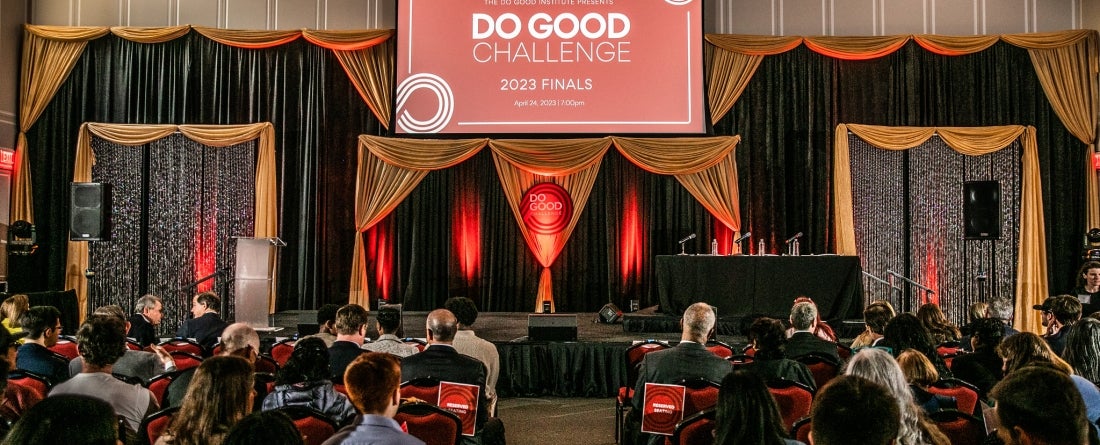
What started with Kevin Bacon in a "Fear the Turtle" t-shirt and 131 student submissions has grown into one of the most anticipated nights on the University of Maryland's calendar. Fourteen years later, the Do Good Challenge is bigger and bolder than ever, and this year's six finalist teams are evidence of that. From a virtual school serving students in conflict-torn Myanmar to a youth movement that has planted more than 2.4 million native seeds, these first-time finalists have already changed thousands of lives before they've even taken the stage. On April 23 at Riggs Alumni Center, they'll compete for a share of $40,000 in front of a packed audience. A panel of expert judges will weigh in, but the audience plays a role too — making this a night where everyone has a stake in the outcome.
The 14th annual finals will take place on Thursday, April 23, at the Riggs Alumni Center at 7 PM. We hope you’ll join us in attending this inspiring night of social impact!
This year’s Do Good Challenge is very exciting because all six of the finalist teams taking the stage are new to the competition. I can’t wait to see these teams share their incredible impact with the audience and use the prize money to go out and do more good.Catherine Curtis Program Coordinator
The founders track is designed for students who have created an original organization, project or initiative, while the leaders track is for those in leadership or decision-making roles, often as a member of a larger club or outside organization.
Take a look at how finalists from both tracks are making an impact:
Founders
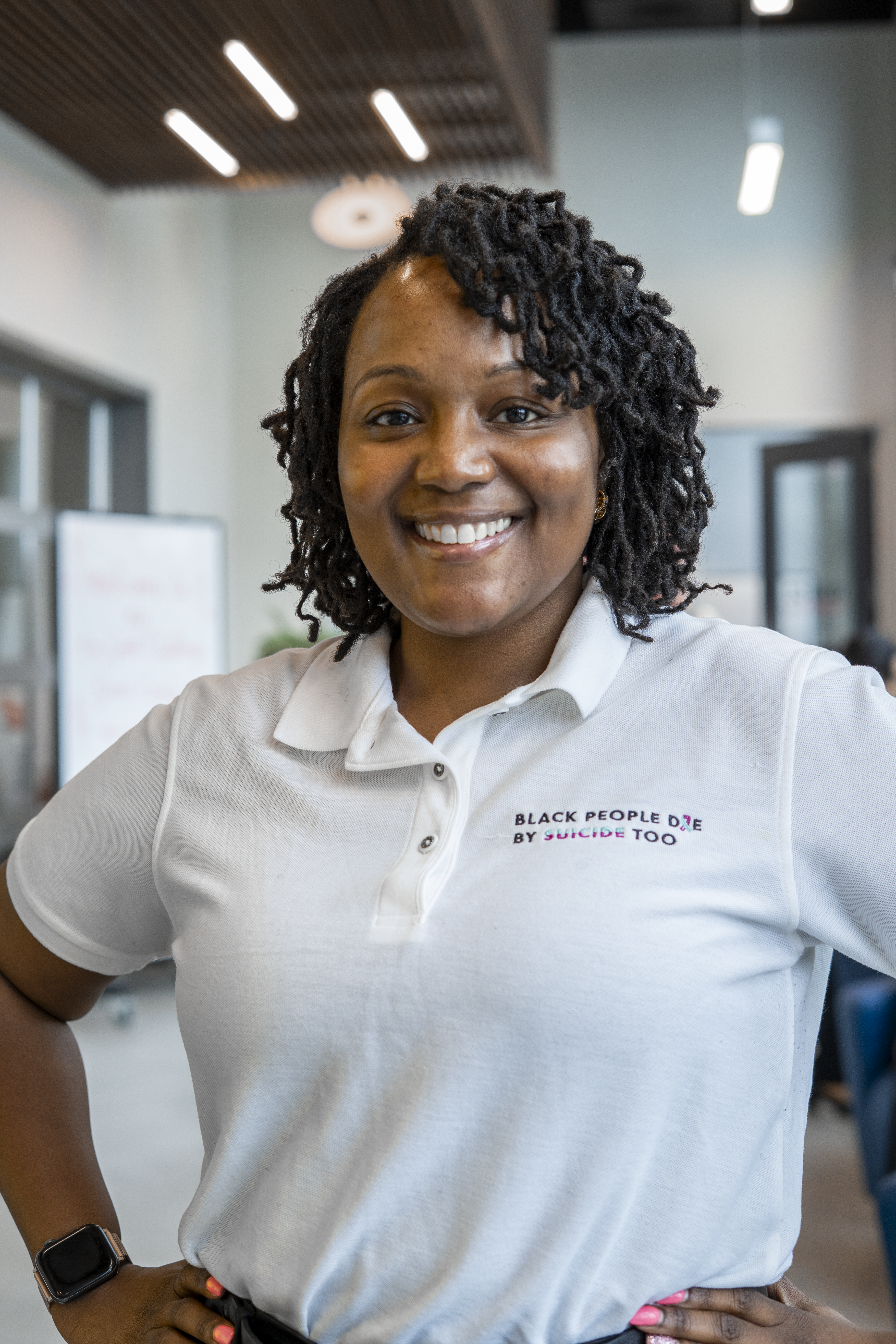
Black People Die By Suicide Too
Black People Die By Suicide Too (BPDBST) provides peer-led mental health education and suicide prevention programming for Black communities. The organization ultimately works to normalize conversations about suicide, reduce stigma and increase access to culturally responsive support. To date, the organization has been able to fundraise over $150,000 and has already reached more than 5,000 individuals in Maryland and over 15,000 people globally through in-person programs, virtual workshops and digital engagement.
- T-Kea Blackman ‘29, College of Arts and Humanities
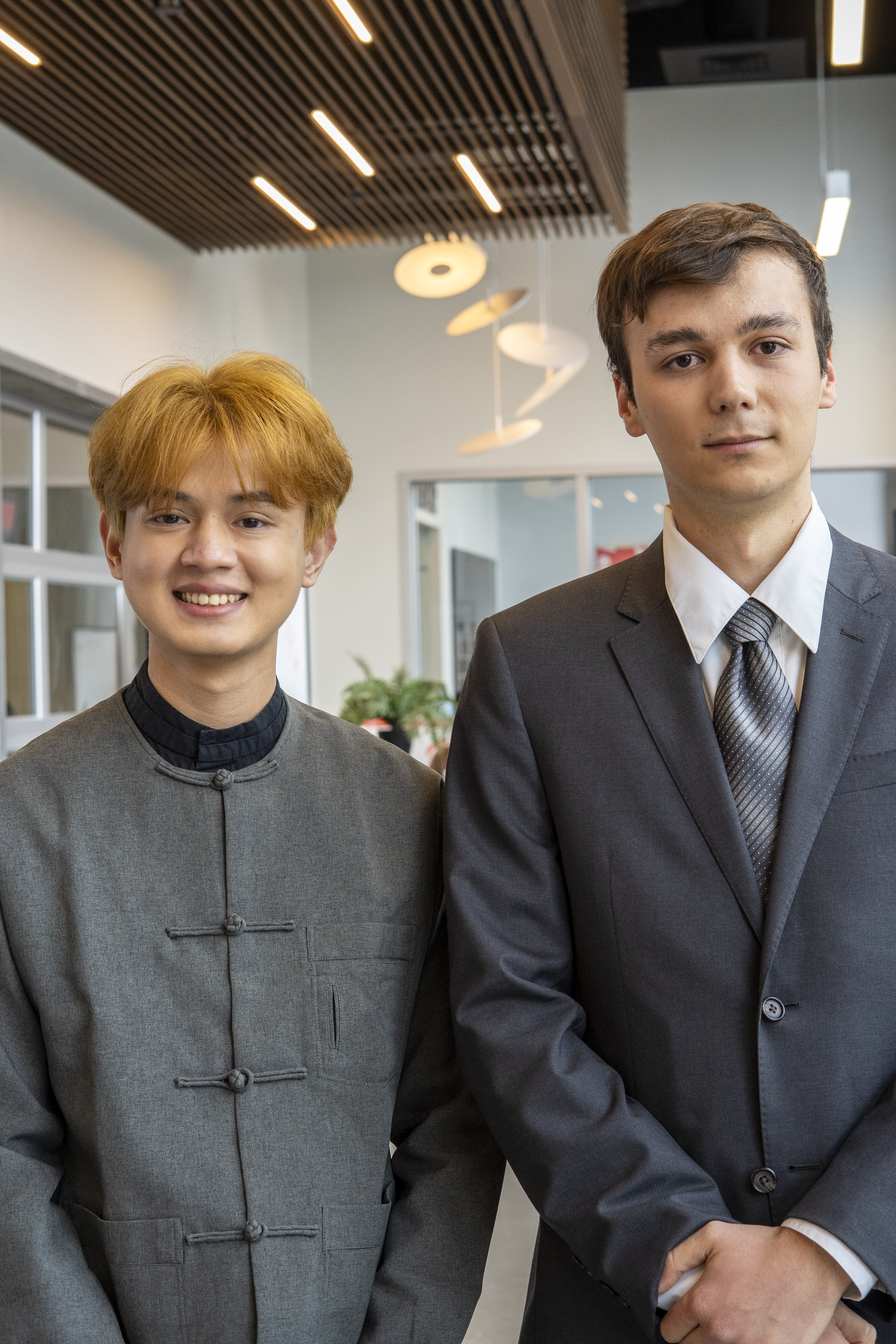
New Generation Myanmar
New Generation Myanmar restores safe, high-quality education for students affected by conflict and school closures. The organization operates a fully virtual K-12 school that delivers bilingual instruction, digital literacy and GED preparation to students across Myanmar. New Generation Myanmar currently serves over 1,500 active students, has educated more than 3,400 learners, and has awarded more than 1,000 students educational scholarships. The school employs more than 100 educators who left the junta-led state system to uphold democratic and ethical principles - these educators have contributed more than 31,000 hours of teaching directly to students.
- Aung Khant Pyae ‘26, Robert H. Smith School of Business
- David Lebedco ‘26, Robert H. Smith School of Business
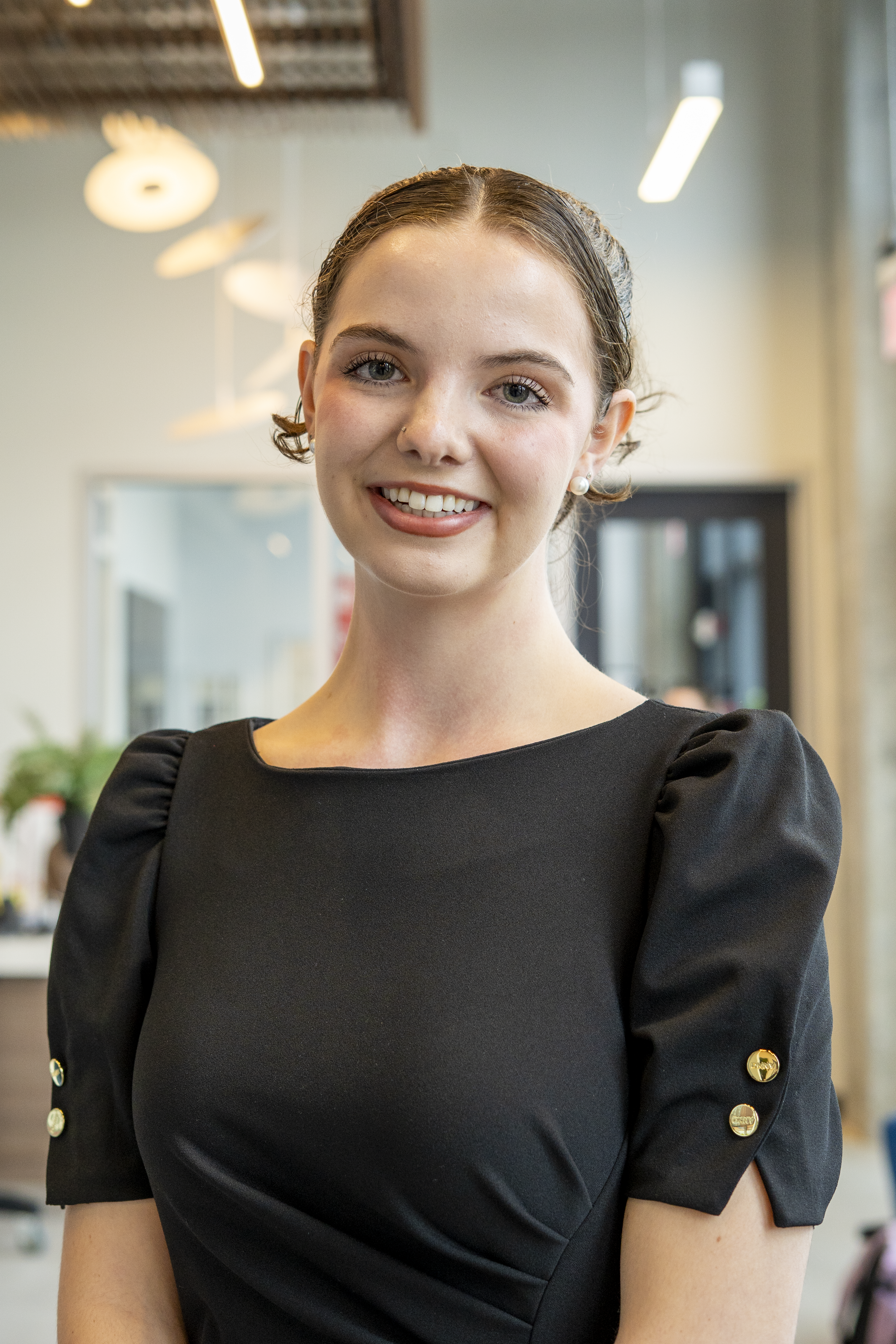
Nurture Natives
Nurture Natives empowers youth through native biodiversity restoration. Through hands-on lessons, school partnerships and youth-led events, Nurture Natives has educated over 10,300 youth and reached 380,000+ community members across Maryland and the East Coast. Students have planted more than 2.4 million native seeds, grown and distributed 70,500 seedlings and 650 trees/shrubs, and restored approximately 420 acres of habitat. Through community partnerships, the Nurture Natives team has also distributed over $36,000 worth of native plants and co-authored Nurture Natives: A Guide to Invasive Species and Their Native Look-Alikes.
- Esther Bonney ‘29, BSOS (former AGNR), Environmental Science & Policy, Do Good Accelerator Fellow
Leaders
The American Diversity Group Free Clinic
The American Diversity Group Free Clinic is a student-led, physician-supervised community health initiative providing free, comprehensive primary care services to uninsured and underinsured Maryland residents. UMD students actively conduct diagnostic screenings, serve as medical assistants and scribes, develop and present health education curriculum, and lead mental health outreach initiatives. Students have been able to serve over 12,800 patients at over 600 free clinics, providing over $2.6 million in medical care. Director of Clinical Affairs Yash Porwal ‘26, a Do Good Accelerator fellow, and Director of Outreach and Operations Anik Saha ’25, both biological sciences majors, will make the initiative’s pitch at the Challenge.
- Yash Porwal ‘26, College of Computer, Mathematical, and Natural Sciences, Do Good Accelerator Fellow
- Prem Saha ‘25, College of Computer, Mathematical, and Natural Sciences
Hack4Impact UMD
Hack4Impact UMD empowers students to use technology for social good by partnering with nonprofit organizations to build free and impactful software solutions. To date, the organization has built 31 free software projects with over 100,000 student hours contributed for nonprofits addressing critical issues ranging from literacy improvement to food insecurity, with assets worth hundreds of thousands of dollars. Their projects have been able to reach over 40,000 nonprofit beneficiaries, while the team has been able to raise over $60,000 to support their growth.
- Krishnan Inban Tholkappian ‘26, College of Computer, Mathematical, and Natural Sciences, Do Good Mini-Grants
- Aaryan Patel ‘26, College of Computer, Mathematical, and Natural Sciences, Do Good Mini-Grants
Remote Area Medical UMD
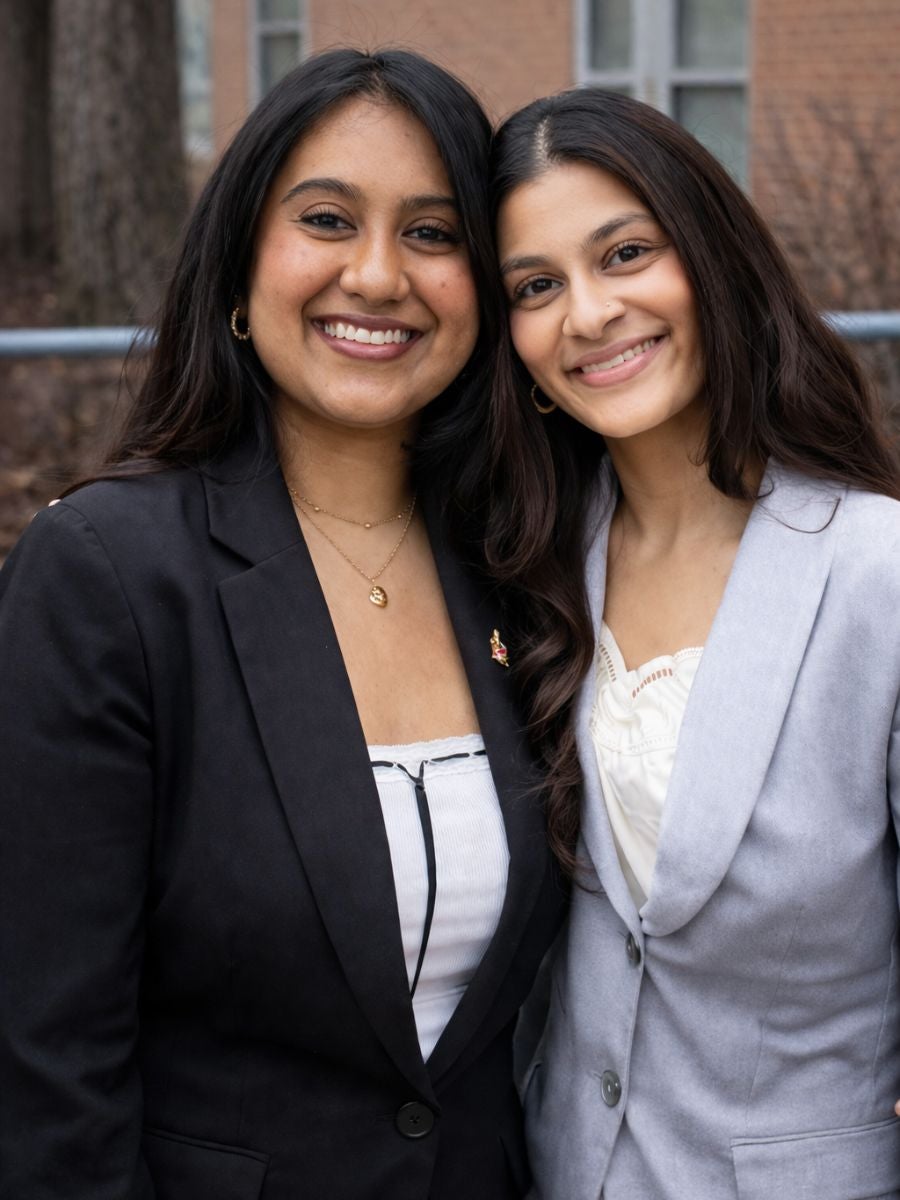
Remote Area Medical UMD expands access to free healthcare for underserved communities while preparing university students to serve with compassion, skill, and purpose. The organization helps students host clinics, where they support the delivery of no-cost medical, dental, and vision care to individuals facing financial, geographic, and systemic barriers to healthcare. Through participation in more than 30 regional clinics, UMD RAM volunteers have supported care delivery for more than 64,000 patients and delivered medical, dental, and vision services valued at over $7.5 million.
- Malini Raghu ‘26, College of Computer, Mathematical, and Natural Sciences
- Saili Khorjekar ‘26, School of Public Health
During the show, guests will also get to hear lightning pitches from some of this year’s most impressive Do Good Challenge semi-finalist teams.
- DefenX is an AI-driven software platform designed to address the growing challenge of active shooter threats in U.S. schools. Their solution combines real-time computer vision, gunshot detection, and seamless integration with existing security infrastructure to enable early threat identification and a coordinated, end-to-end response.
- Lean on Me UMD is a university chapter of a nonprofit that provides university students with peer emotional support via text. Since the UMD chapter was founded in 2020, it has operated 12 hours a day, 7 days a week, and it has received tens of thousands of conversations from fellow students on campus.