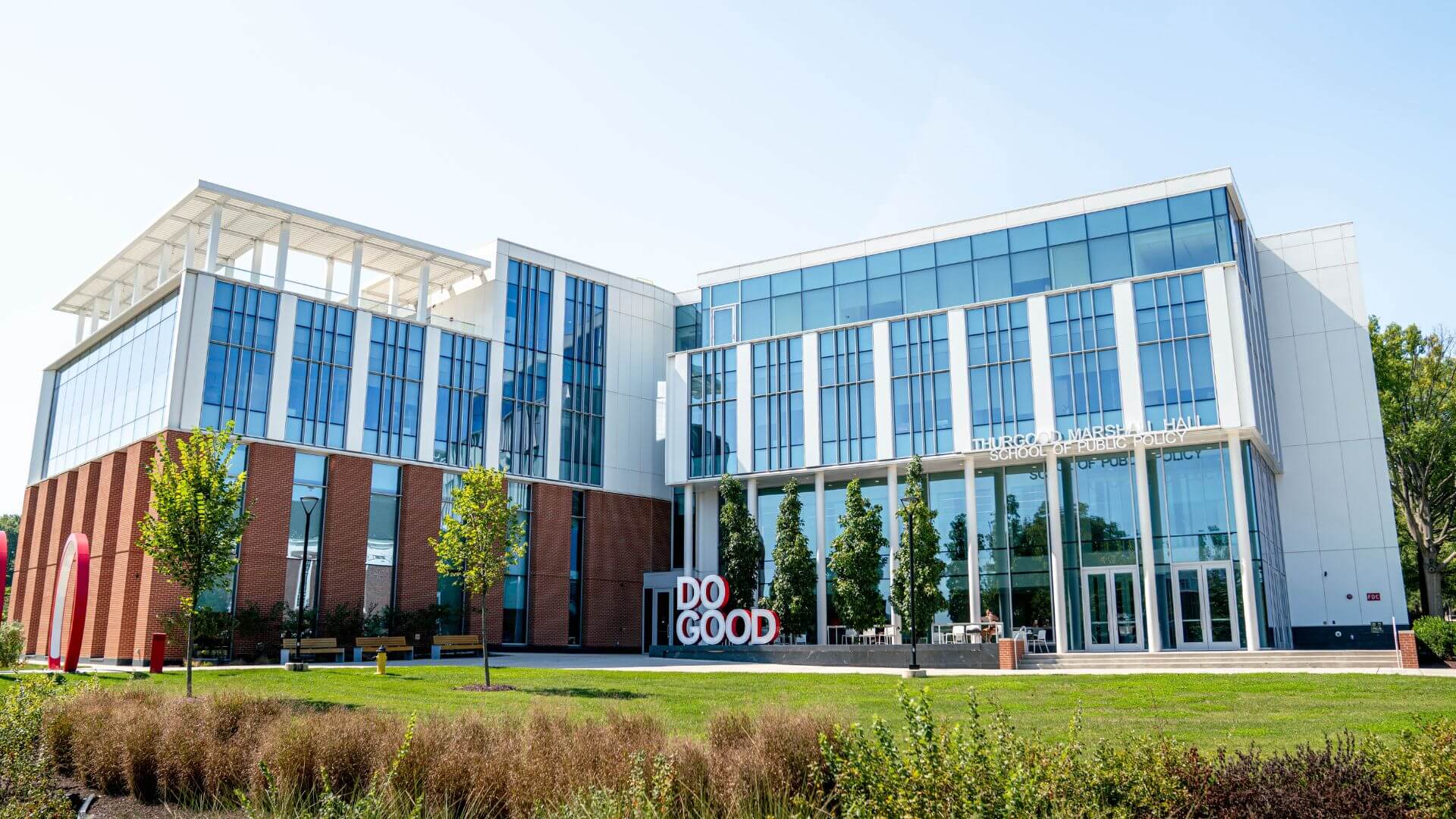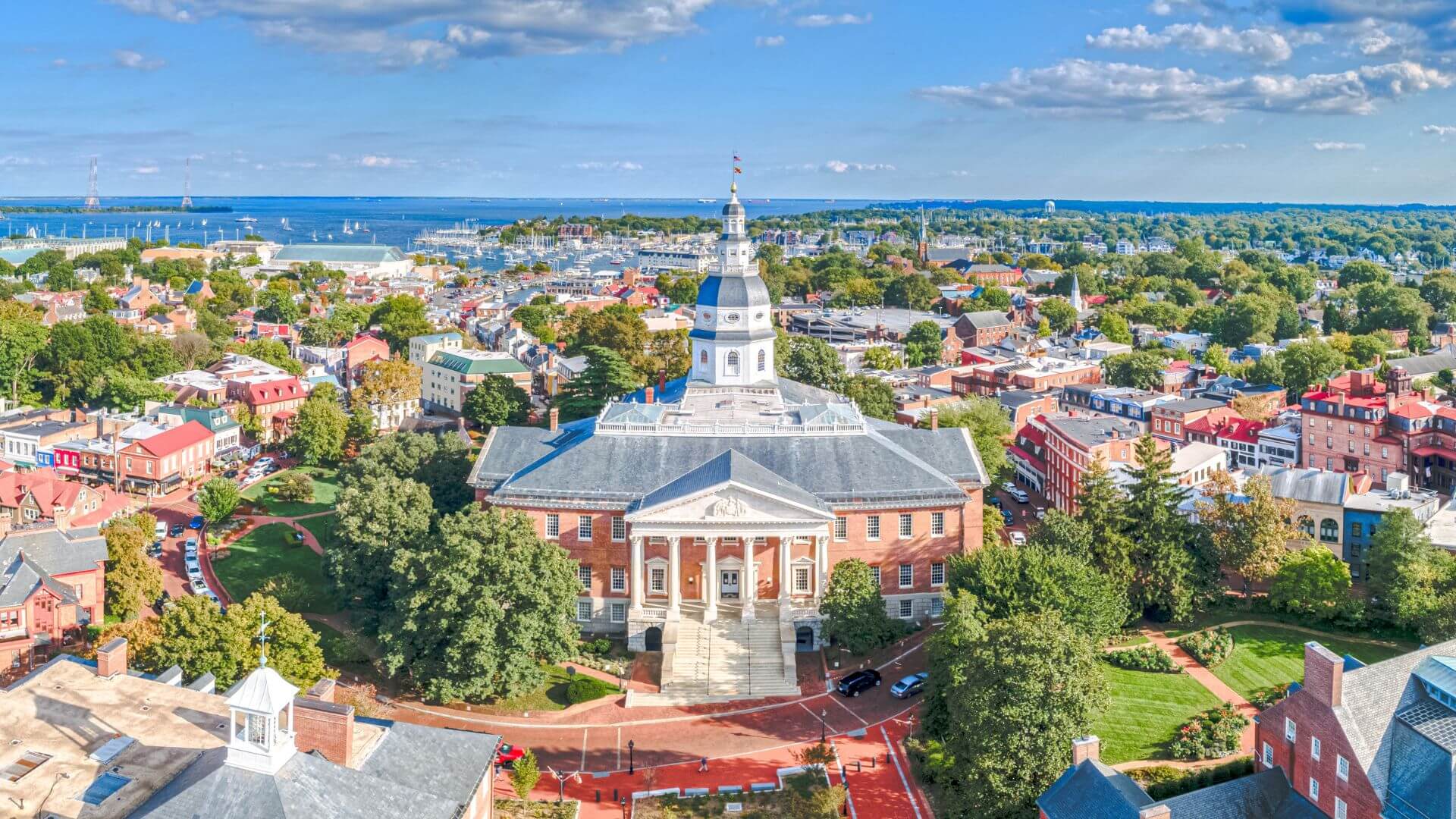

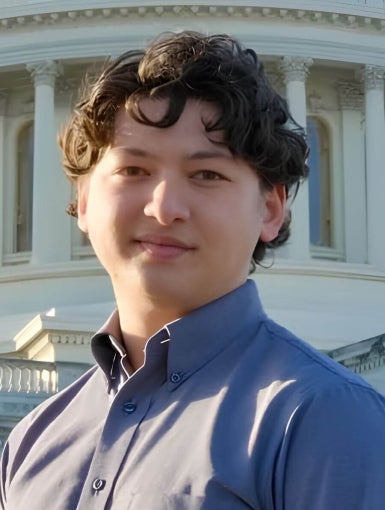
A classroom simulation about frustrated homeowners in a golf club neighborhood might not seem like preparation for moderating a local election forum, but for School of Public Policy student Gavin Neubauer, the exercise became unexpectedly relevant when he stepped into the role of moderator for Berwyn Heights’ Candidates Night. The event, held ahead of the town’s May 5 election, brought candidates and residents together to discuss issues ranging from traffic safety to accessibility and neighborhood concerns. Neubauer moderated the discussion alongside fellow classmate Mars Delehant.
For Neubauer, the experience offered a firsthand look at the kind of community-level policymaking often discussed in the classroom but less frequently seen up close. “Local government is the real architect of a community’s hopes and vision for the future,” he said. “While there exists larger and grander stages in the policy world, local governments have to effectively answer the questions of: What should our community be and how do we achieve it?”
Neubauer said several courses helped shape how he approached his moderator role, particularly PLCY201, which focuses on public leadership and civic engagement, and PLCY302, a course on pluralism within public policy.
One moment that resonated with him came from a PLCY201 simulation led by School of Public Policy Lecturer Nancy Lineman involving disgruntled residents in a golf club neighborhood complaining about golf balls constantly hitting their homes. While the scenario initially felt exaggerated, Neubauer said it ultimately captured the competing priorities often present in local politics. “At the time, it felt so outlandish,” he said, “but it was the best simulation for local politics I’ve ever had, informing me of the specific experiences stakeholders bring to the table.”
He also credited PLCY302 with Associate Clinical Professor Ebonie Johnson Cooper for helping him think more critically about how governments balance competing priorities and serve communities with different needs and perspectives. During the forum, Neubauer said those lessons became tangible as residents raised questions about issues ranging from traffic cameras and streetlights to safe playgrounds and accessible sidewalks.
Neubauer looked out at an audience made up of both young parents and longtime residents, each bringing different concerns but a shared investment in the community. “As a moderator, I had to give equal time to all issues and respect for the experiences that led people to care about them,” Neubauer said. “While I am not a parent or an elder, I brought my policy training to ensure their concerns about safe playgrounds and accessible sidewalks were addressed.”
Moderating the candidates forum also required him to balance competing perspectives while keeping the discussion fair and productive, particularly when candidates began directly responding to one another during the event. “When moderating seven people, fairness becomes essential,” he said. “Every candidate has their own sense about whether they are being treated fairly.”
What stood out most to Neubauer was the willingness of candidates and residents to engage directly on issues affecting the community. He said he was struck by how openly candidates addressed difficult questions at a time when political discourse often feels more focused on personal attacks than substantive discussion.