
When civil wars end, non-state armed groups often integrate into post-conflict militaries. Yet rebel-military integration does not always happen smoothly. In some cases, former rebels cooperate with new leaders, forming powerful national armies that underpin postwar stability. In others, they resist the authority of new leaders, maintaining clandestine armed networks that disrupt centralized state-building.
At this event, Philip Martin investigates a fundamental political challenge faced by post-conflict states: how to create obedient national militaries from the remnants of insurgent forces. Martin argues that how field commanders of non-state armed groups govern during war explains variation in post-conflict state-building. Rebel commanders who build accountable governance systems gain strong social support from rebel-ruled communities, becoming locally embedded. Thanks to these community ties, which persist after the war, these embedded commanders have the leverage to push the central government for concessions, resist directives to disarm fighters or even orchestrate coup d'états. Wielding in-depth evidence from Côte d'Ivoire and cases of rebel-military integration elsewhere, Martin shows that good governance during wartime can, ironically, lead to poor postwar state consolidation.
About the Speaker:
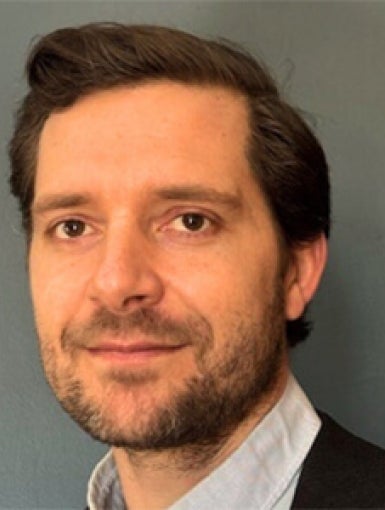
Dr. Philip A. Martin is an assistant professor at the Schar School of Policy and Government at George Mason University, and the associate director of the Center for Security Policy Studies.
Martin's research specializes in the causes and consequences of political violence, post-conflict peacebuilding and African politics. His first book, Strong Commanders, Weak States: How Rebel Governance Shapes Military Integration after Civil War, was published with Cornell University Press in 2025. His work has been published in International Security, Security Studies, World Development, Comparative Political Studies, Comparative Politics, Journal of Peace Research, African Affairs, Studies in Comparative International Development and other outlets.
In 2020, Martin was co-awarded with Giulia Piccolino and Jeremy Speight the Harry Frank Guggenheim Distinguished Scholar Award for research on armed groups and peacebuilding in Côte d’Ivoire. His research has also received support from the Fulbright Foundation, the Social Sciences and Humanities Research Council of Canada, the Belfer Center for Science and International Affairs at Harvard University and the United States Agency for International Development (USAID).
He received his PhD in political science from the Massachusetts Institute of Technology, an MA in international affairs from Carleton University and a BA in political science from the University of Guelph.